Great time guys. Glad we had a solid turnout. Gets kind of old snuggling up to the same guys each year.
So props to Jonathan and Jared for sharing their 4th with me, Steve his third, and to all the new people that braved the testosterone high.
Bonus points to Alan for his rock climbing skilz; Jared for his medical help- couldn't have made it out without you (Felt like Fish Creek all over again but much more terrain plus your brace was better); and Jonathan for his landscaping and fire skilz. Caleb it was good to meet you again, you fit in great.
Very excited to have lived off the land (water) Saturday night with our crawfish boil and fried skillet fish. Thanks for the help Jon, Jar, and Steve with the traps and catchins. -sorry Jared we didn't get that squirrel
Got to see other animals out there too besides squirrels. Saw 3 fat turkeys on the way in and 5+ on the way out. And then there were these guys:
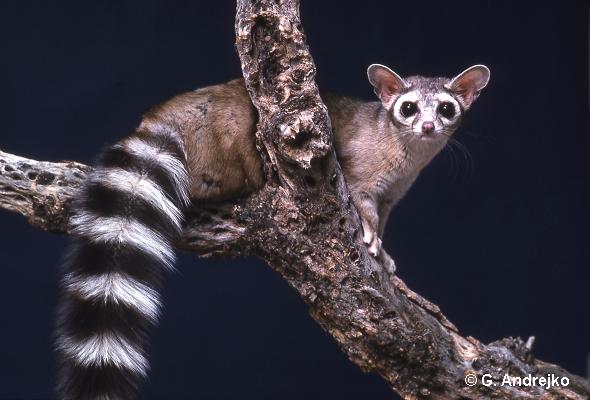
DESCRIPTION: A cat-sized mammal resembling a small fox with a raccoon-like tail. The tail is as long as head-body length. Muzzle is elongate, pointed, and grizzled; nose pad is blackish. Tail is marked by numerous alternating black and white rings and a black tip. Populations tend to be smaller in the interior West, Southwest, and Baja California, and larger in southern Mexico.
Nocturnal, bold but not aggressive, secretive. Dens in caves, crevices, and hollow trees. Uses abandoned buildings and even attics of occupied dwellings. Will visit campsites and rummage through gear sometimes taking items, especially shiny ones. Agile climbers, negotiating trees and shear rock faces with ease. Several ringtails may occupy the same area. Afflictions include rabies and an assortment of fleas, ticks, mites, and lice externally, and cestodes and nematodes internally. Coyotes, bobcats, great horned owls and other sizable carnivores prey on ringtails. The ringtail’s considerable tail provides balance for negotiating narrow ledges and limbs, even allowing them to reverse directions by performing a cartwheel. They can rotate their hind feet 180degrees, giving them the ability to rapidly descend cliffs or trees as well as cacti. Furthermore, ringtails can ascend narrow passages by stemming (pressing all feet on one wall and their back against the other or pressing both right feet on one wall and both left feet on the other, and wider cracks by ricocheting between walls.
HABITAT: Rocky walls of canyons, talus slopes, cliffs and ridges from desert scrub through chaparral and the oak-pine belt. Less common in heavily wooded areas. Associated with water (within .5 miles) such as rivers, streams, tinajas, seeps and springs.
http://www.azgfd.gov/w_c/edits/documents/Bassastu.d.pdf
Ring Tailed Cats kept sneakin into camp even while we were in it. I know Paul had his own experience but I had one come down the tree and stare at me in the moonlight as I slept three feet away. I barely heard the rustle of his tail on the leaves in front of me.
Glad you guys got to see the Gardens. Sorry Jared missed it but thanks for helping me back to camp.
First I was scared bec I saw my foot go 90deg under me even though I recognized the gunshot sound for what it was. After I found out the pain wouldn't go past anything I couldn't handle, I was upset I ruined the day. After I knew you guys could still go on, my mind went to the hike up and out.
Jared wrapped the snot out of it for that though and with a walking stick and slow steady pace we were at the top in less than an hour.
Bob I'm sorry we didn't get to see your visit. We should've worked out a gunshot system like we did with Paul. We could've sent fresh meat Caleb up for help.


